

Discover which types of waste require special disposal and how small actions can protect your family and the environment.
Have you ever stopped to think about the destination of the waste you produce every day? Many times, due to lack of information, we end up putting dangerous materials in the regular trash without realizing that they can cause accidents, contaminate the environment, and even put other people’s health at risk.
Although the trash bag may seem like the easiest place for everything, some types of waste require special care. This is because certain materials contain toxic substances, chemical components, sharp parts, or elements that can contaminate soil and water.
The good news is that, in most cases, proper disposal is simple and can be done with small changes in habit.
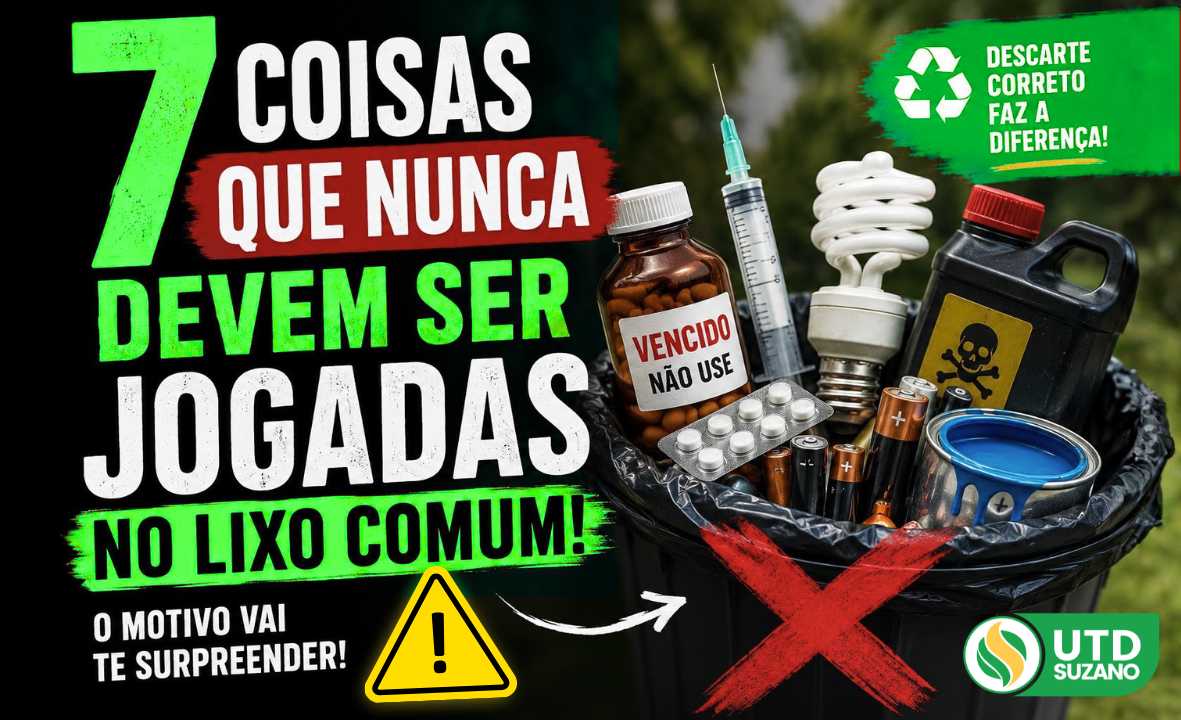
Check out seven things that should never be thrown in the regular trash and understand why.
1. Expired or Unused Medications
Who hasn’t found a forgotten medicine in the cabinet? Many people throw pills, syrups, or ointments into the trash or even flush them down the toilet, but this practice can cause serious problems.
Medications contain chemical substances that can contaminate soil and water resources. In addition, when improperly discarded, they may be found by children, animals, or anyone who has access to the waste.
What should you do?
Keep medications in their original packaging whenever possible, and never dispose of them in regular trash or the toilet. Companies, clinics, medical offices, and other establishments that generate this type of waste can rely on UTD Suzano, which specializes in the collection, treatment, and environmentally responsible final disposal of these materials. Individuals should check local collection programs or contact UTD Suzano for guidance on proper disposal.
2. Batteries
Batteries are found in remote controls, watches, toys, laptops, and many electronic devices. Despite their small size, they can pose significant environmental risks.
These materials may contain metals such as lead, cadmium, and nickel, which can contaminate soil and water when disposed of incorrectly.
What should you do?
Store used batteries in a dry container and take them to designated collection points, usually found in supermarkets, electronics stores, or businesses that sell these products.
3. Light Bulbs
Many people still place burned-out light bulbs directly in the regular trash. The problem is that some types of bulbs contain components that require proper treatment.
When broken, they can release harmful substances and cause cuts and other accidents.
What should you do?
Store the bulb intact, preferably in its original packaging or wrapped in cardboard, and take it to a collection point or a reverse logistics program.
4. Used Cooking Oil
After cooking, it is common to wonder: what should I do with the leftover oil?
Pouring oil into the trash or down the sink can create serious environmental problems. In addition to contributing to water pollution, it can damage sewage treatment systems and cause blockages.
What should you do?
Let the oil cool, pour it into a tightly sealed plastic bottle, and take it to a collection point. In many places, the oil is recycled and turned into other products.
5. Electronic Devices
Old cell phones, cables, chargers, computers, and small electronic devices are often forgotten in drawers or end up in the regular trash.
These devices contain metals and components that can be recovered, as well as substances that require proper treatment.
What should you do?
Look for electronic waste collection points or reverse logistics programs offered by manufacturers and specialized stores.
6. Needles, Syringes, and Sharps
With the growing use of injectable medications at home, such as treatments for diabetes and weight management, more people are dealing with needles and syringes in the household environment.
Throwing these materials into regular trash can cause serious accidents. Waste collection workers may suffer puncture injuries and be exposed to potentially contaminated materials.
What should you do?
After use, place needles and syringes in a rigid container with a lid, such as a sturdy plastic bottle, to prevent accidents. Healthcare companies, clinics, medical offices, and other waste generators should send these materials to specialized companies, such as UTD Suzano, which performs collection, treatment, and final disposal in compliance with all environmental and health regulations. If you are an individual, seek guidance on local drop-off points or contact UTD Suzano to learn the safest way to dispose of these materials.
7. Paint, Solvents, and Chemical Products
Leftover paint, solvents, pesticides, and other chemical products should also never be thrown in the regular trash.
These substances may contain flammable or toxic components capable of contaminating the environment and posing risks to human health.
What should you do?
Keep products in their original packaging, properly sealed and identified. Whenever possible, look for companies or programs specialized in receiving chemical waste.
Why Is Proper Disposal So Important?
It may seem that a single item discarded incorrectly does not make a difference. However, imagine thousands of people doing the same thing every day.
The result can be soil and water contamination, an increased risk of accidents, and the exposure of workers and entire communities to hazardous materials.
In addition, many of these wastes contain components that can be recycled, reused, or treated properly, reducing environmental impacts and promoting more sustainable resource management.
Small Actions, Big Results
Proper waste disposal is not complicated. In most cases, it simply requires separating certain materials and taking them to the appropriate location.
This simple change in habit helps protect the environment, prevents accidents, and contributes to a more aware and responsible society.
After all, taking care of the waste we produce is also a way of taking care of people and the planet we live on.