

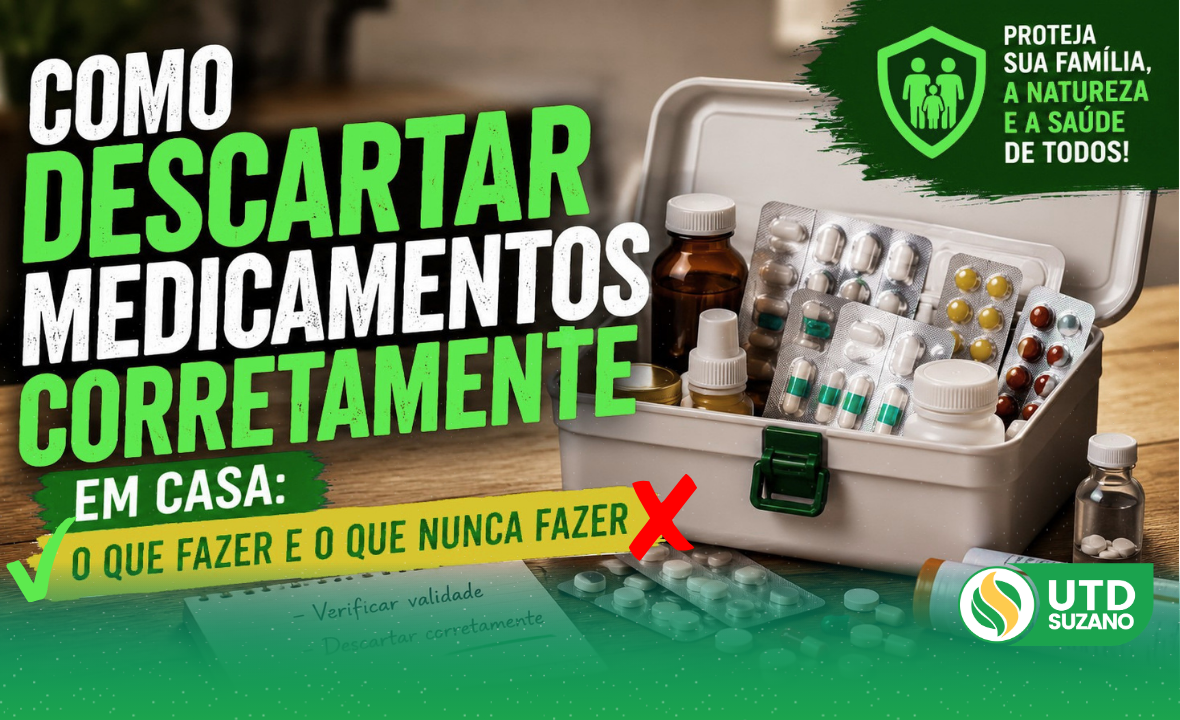
Proper medication disposal protects your family, waste collection workers, and the environment. Learn how to do it the right way.
Have you ever found an expired medication in your medicine cabinet and wondered what to do with it? Or perhaps you finished a treatment and were left with unused pills, syrups, or ointments sitting forgotten at home?
This is a very common situation. Millions of people keep medications stored for months—or even years—without realizing that they can lose their effectiveness, pose health risks, and, most importantly, cause environmental damage if disposed of improperly.
Throwing medications into the regular trash, flushing them down the toilet, or pouring them down the sink may seem like a quick solution, but these practices can contaminate soil and water, putting waste collection workers, animals, and even other people at risk.
The good news is that proper medication disposal is much easier than most people think. In this article, you’ll learn which medications require special attention, how to store them before disposal, and which practices should always be avoided.
Why Is Proper Medication Disposal So Important?
Medications are designed to produce specific effects in the human body. For that very reason, they contain active ingredients and chemical substances that should never be released into the environment.
When medications are disposed of incorrectly, their chemical compounds can reach the soil, rivers, and groundwater. Depending on the substance, they may affect aquatic life, damage ecosystems, and make water treatment more difficult.
There is another important concern as well. Medications discarded without proper care can be found by children, pets, or anyone who comes into contact with household waste, increasing the risk of poisoning and accidents.
In short, proper medication disposal is an essential measure to protect both public health and the environment.
Which Medications Should Never Be Thrown in the Regular Trash?
The answer is simple: almost all of them.
Whether they are tablets, capsules, syrups, ointments, eye drops, sprays, or injectable medications, they should never be disposed of with regular household waste.
Some of the most common examples include:
- Antibiotics;
- Pain relievers;
- Anti-inflammatory medications;
- Allergy medications;
- Antidepressants;
- Hormonal medications;
- Insulin;
- Injectable insulin pens;
- Weight-loss medications such as Ozempic®, Mounjaro®, and similar products;
- Syrups;
- Ointments;
- Eye drops;
- Expired vitamins and dietary supplements;
- Veterinary medications.
All of these products require environmentally responsible disposal.
What Should You Do with Expired Medications?
Found an expired medication?
The first step is simple: do not use it.
Once a medication has expired, the manufacturer can no longer guarantee its effectiveness or safety.
After that, follow these recommendations:
✔ Keep the medication in its original packaging whenever possible.
✔ Do not remove tablets from blister packs or open capsules.
✔ Do not mix medications with household waste.
✔ Store them temporarily in a dry place, away from children and pets.
✔ Take them to an authorized collection point or to a company specialized in healthcare waste management.
These simple precautions help prevent accidents during transportation and ensure proper waste management.
What You Should Never Do
Some disposal practices are still very common—but they should always be avoided.
❌ Throw medications into the regular trash.
❌ Flush pills down the toilet.
❌ Pour syrups down the sink.
❌ Burn medications at home.
❌ Bury medications in your yard or garden.
❌ Mix medications with recyclable materials.
❌ Reuse expired medications.
❌ Donate medications that have passed their expiration date.
Although these options may seem convenient, they can cause environmental contamination and create serious health and safety risks.
What About Medication Packaging?
This is one of the most frequently asked questions.
Not every type of packaging requires the same disposal method.
As a general rule:
Empty blister packs may be disposed of according to your local waste collection guidelines, provided they contain no medication residue.
Clean cardboard boxes can usually be recycled.
Bottles or containers with leftover medication should be disposed of together with the medication itself.
Syringes, needles, and injection pens require special handling and should never be thrown into regular household trash.
Whenever you’re unsure, the safest option is to take the entire package to a specialized collection point.
How to Dispose of Syringes, Needles, and Injection Pens
The growing use of injectable medications at home has created a new challenge.
Needles and syringes can cause serious injuries if they are disposed of improperly.
Waste collection workers face the greatest risk, since accidental needle sticks may expose them to biological hazards and infectious diseases.
The correct procedure is simple:
- Never recap a needle after use.
- Immediately place the used needle into a rigid, puncture-resistant container with a secure lid, such as a sturdy plastic bottle.
- Clearly label the container to help prevent accidents.
- Never dispose of this container in the regular trash.
- Take it to a facility authorized to receive healthcare waste.
These simple steps greatly reduce the risk of accidents and injuries.
How to Store Medications Before Disposal
You may not always be able to take medications to a collection point immediately.
Until then, follow these basic safety guidelines:
- Store medications in a dry location.
- Keep them away from excessive heat.
- Protect them from direct sunlight.
- Keep them out of reach of children.
- Avoid humid areas, such as bathrooms.
- Never remove the original labels from the packaging.
These precautions make it easier to identify the medication and help ensure safe storage until proper disposal.
What Does Brazilian Legislation Say?
The proper management of medications and healthcare waste is regulated by several Brazilian laws and regulations designed to protect public health and the environment.
The main ones include:
Law No. 12,305/2010 – National Solid Waste Policy (PNRS)
Establishes the principles for environmentally sound waste management and encourages reverse logistics programs for a variety of products, including certain healthcare-related waste.
Law No. 9,605/1998 – Environmental Crimes Law
Provides civil, administrative, and criminal penalties for actions that cause environmental damage, including the improper disposal of hazardous waste.
ANVISA RDC No. 222/2018
Defines the rules for the management of healthcare waste, including medications, syringes, needles, and other sharps generated by healthcare services.
CONAMA Resolution No. 358/2005
Establishes technical guidelines for the treatment and final disposal of waste generated by healthcare services.
Although many of these regulations are primarily directed at healthcare facilities and businesses, they reinforce the importance of ensuring that medications receive environmentally responsible disposal throughout their entire lifecycle.
Companies and Healthcare Facilities Also Have Responsibilities
Hospitals, medical clinics, physicians’ offices, pharmacies, laboratories, and pharmaceutical manufacturers generate much larger quantities of expired or unusable medications than households.
For these organizations, Brazilian legislation requires specific procedures for:
- Waste segregation;
- Safe storage;
- Proper transportation;
- Specialized treatment;
- Environmentally appropriate final disposal.
Failure to comply with these requirements may result in environmental contamination, administrative penalties, substantial fines, and legal liability.
For this reason, partnering with a specialized waste management company is essential to ensure regulatory compliance, operational safety, and environmental responsibility throughout the entire process.
UTD Suzano Is a Specialist in Proper Medication Disposal
When it comes to healthcare waste management, experience and reliability make all the difference.
UTD Suzano specializes in the collection, transportation, treatment, and final disposal of medications, sharps, and a wide range of healthcare waste, always in full compliance with Brazilian environmental and health regulations.
Every stage of the process is carried out with complete traceability, operational safety, and environmental responsibility, providing peace of mind for hospitals, clinics, physicians’ offices, pharmacies, laboratories, pharmaceutical companies, and other waste generators.
UTD Suzano is also the only waste incineration company certified under ISO 14001 for this scope of operations, reinforcing its commitment to continuous improvement, environmental management, sustainability, and operational excellence.
This certification reflects the company’s dedication to maintaining the highest standards of environmental performance while ensuring that healthcare waste is handled safely and responsibly from collection through final disposal.
Conclusion
Proper medication disposal is a simple action that can make a significant difference in protecting public health and preserving the environment.
By avoiding disposal in household trash, toilets, or sinks, you help prevent accidents, reduce environmental contamination, and contribute to a safer and more sustainable waste management system.
If you represent a company, clinic, hospital, laboratory, pharmacy, or any organization that generates expired medications or healthcare waste, UTD Suzano offers complete solutions for the safe collection, treatment, and environmentally responsible final disposal of these materials.
Small actions today can help build a healthier, safer, and more sustainable future for everyone.